


In the food production sector, the spraying of viscous fluids such as sauces, glazes and melted chocolate is one of the most delicate and strategic operations in the entire production process. Whether glazing a confectionery line, applying a sauce to savoury snacks or coating baked goods with chocolate, the quality and uniformity of the deposited layer directly affect the appearance, taste and shelf life of the finished product.
Achieving a homogeneous, reproducible and waste-free distribution is no trivial goal: high-viscosity food fluids behave very differently from water or solvents, and require atomisation technologies specifically designed for their rheological characteristics. This is where atomisers and nozzles for viscous fluids come into play.
Atomisation is the process by which a liquid is broken down into micro-droplets and projected onto a surface or dispersed into an environment. In the case of viscous fluids for food use, the process must take into account far more complex physical parameters than low-viscosity fluids.
There are three main technical approaches used in the food industry:
Pneumatic atomisation: the viscous fluid is pushed through a nozzle and simultaneously struck by a compressed air flow that breaks it into fine droplets. This method is the most common for sauces and glazes because it allows precise control of droplet size and flow rate. Air pressure and fluid pressure are the two main parameters to adjust.
Airless atomisation: the fluid is pumped at high pressure through a calibrated orifice. It is suitable for moderately viscous fluids but can be problematic with very dense products or those containing suspended solid particles.
Rotary atomisation: the fluid is fed onto a high-speed rotating disc which, by centrifugal force, disperses it into droplets. Less common in food processing but effective for large-scale applications with particularly dense fluids such as creams and fillings.
In the case of melted chocolate, process temperature is a critical factor: the material must be kept within a precise thermal window (generally between 40 °C and 50 °C) to avoid premature crystallisation or loss of fluidity. Nozzles and feed lines must therefore be heated.
Those who work daily with the spraying of viscous fluids are well acquainted with the critical issues that can arise during production. Among the most frequent:
Nozzle clogging: sauces, sugary glazes and chocolate tend to form deposits in dead zones of the ducts or inside the nozzle orifice, especially during production breaks or shift changes. This causes spray irregularities and requires plant stoppages for cleaning.
Viscosity variability: many food products change viscosity depending on temperature, degree of agitation or percentage of dissolved solids. A sauce that flows perfectly at the start of a shift may become too dense after a temperature drop, compromising spray quality.
Thread formation: highly viscous fluids tend to form threads instead of discrete droplets, depositing the product unevenly on the surface to be coated.
Leaks and waste: imprecise pressure calibration or a nozzle not suited to the fluid being processed can generate overspray, resulting in waste of raw material and contamination of areas surrounding the production line.
Cleaning difficulties: in the food sector, cleaning of spraying systems must take place quickly and in compliance with health and hygiene regulations. Nozzles with complex geometry or hard-to-access cavities represent a microbiological risk.
The choice between a manual and an automated spraying system depends on several factors: production volume, required repeatability, budget, line flexibility and the quality level of the finished product.
Manual spraying, typically carried out with airbrush guns or hand-held nozzles connected to a compressed air circuit, is still widespread in laboratories, artisan productions and high-product-variability contexts.
Advantages:
Disadvantages:
Automatic systems integrate fixed or moving nozzles on robotic arms, conveyor belts or spray tunnels, with manual or electronic control of pressure, temperature and flow rate.
Advantages:
Disadvantages:
In general, for industrial productions with high volumes and standardised products, automatic spraying is the most cost-effective choice in the medium to long term. For artisan environments, pastry shops or lines with high recipe variability, manual spraying remains a valid and flexible solution.
AIRCOM offers a range of solutions specifically designed for spraying viscous fluids in food applications, with particular attention to compliance with food-sector health and hygiene regulations (FDA-compliant materials, food-contact surfaces).
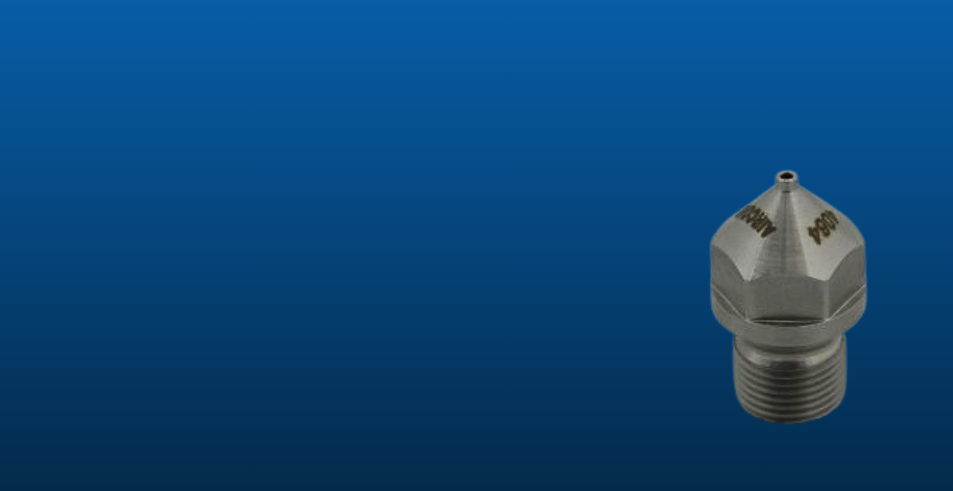
Spray guns and nozzles for viscous fluids: for automatic applications, AIRCOM offers spray guns capable of handling thick sauces, fruit coulis, caramel glazes or chocolate coatings without clogging, thanks to optimised internal geometries.
Automatic cleaning systems: to reduce machine downtime and prevent clogging, AIRCOM provides cleaning solutions that can be integrated into automatic lines, performing washing cycles with water or appropriate detergents, ensuring production continuity and hygienic compliance.
Technical consulting and custom configuration: in addition to its products, AIRCOM supports food-sector customers with a technical consulting service to select the right product based on fluid viscosity, required flow rate, process temperature and the type of surface to be coated.
The spraying of viscous fluids such as sauces, glazes and chocolate is a technical process that requires specific expertise, appropriate tools and a deep understanding of the characteristics of the products involved. Choosing the wrong nozzle or adopting a solution not designed for the food industry means accepting waste, inefficiency and quality risks that directly affect the finished product and consumer satisfaction.
AIRCOM is a reliable partner for those operating in the food sector who need high-performance, hygienic and durable atomisation solutions. From a single gun for an artisan workshop to an automatic system integrated into a high-speed industrial line, the AIRCOM range covers the full spectrum of production needs, with products compliant with sector regulations and specialised technical support.
To receive personalised consulting or request an application test, contact the AIRCOM technical team.
Find out how to get laser customization on your products
Read more 22 April 2024